
 English

Views: 0 Author: Site Editor Publish Time: 2026-10-19 Origin: Site


Choosing the right NPN transistor can stall your project. You need a part that lasts, performs, and fits your budget. This guide highlights seven reliable NPN transistors you can trust. Each pick meets strict criteria: long-term availability, proven performance, cost-effectiveness, and ease of use for through-hole or SMD designs. Check the current rating for your load. You'll find key specs, typical applications, and a final comparison to speed your decision. Whether you need a bipolar junction transistor for switching or a low-noise type for amplification, this NPN list covers it. We focus on current handling, voltage ratings, and gain. By the end, you'll know which NPN suits your next build. Let's explore your NPN options.
Use the BC547 when you need to make weak signals stronger with low power.
Use the 2N2222 for basic switching and powering parts that need up to 800mA.
Choose the 2N3904 when you need fast switching for logic signals or PWM control.
Choose the S8050 for small surface-mount projects.
Use the BD139 for medium-power audio amplifier stages.
Pick the TIP31C when you need to switch high current up to 3 amps.
Always buy transistors from trusted suppliers like MeiZhao Electronic.
Make sure the transistor’s voltage, current, and package fit what your project needs.
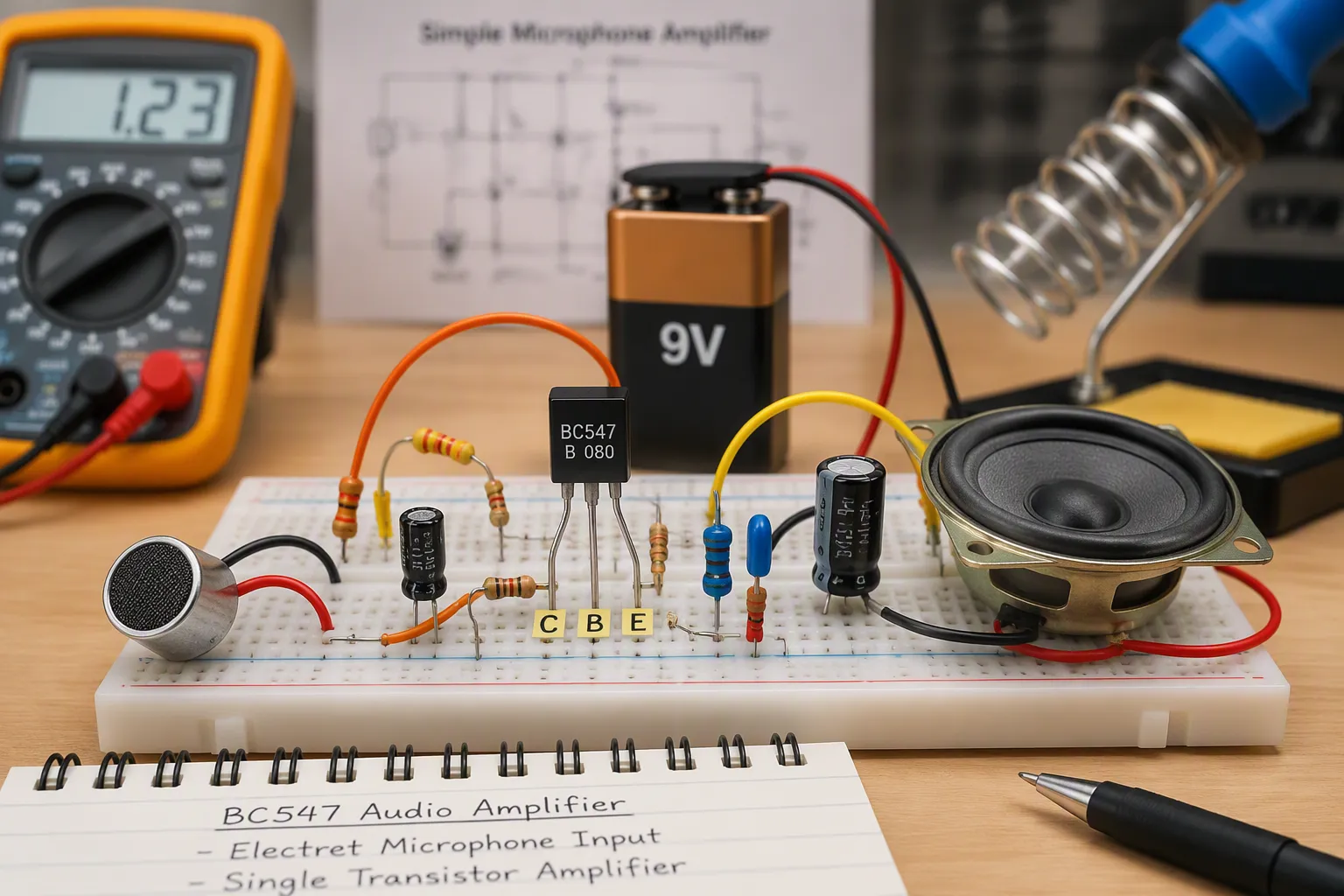
Every electronics bench needs a few dependable NPN transistors ready for action. These three components handle the majority of low-power tasks you will encounter. They offer proven performance, wide availability, and straightforward operation. You can find them in countless hobbyist kits and professional designs alike. Let us examine each one closely.
The BC547 stands as one of the most recognizable NPN transistors in existence. Manufacturers produce this component in massive volumes, which keeps costs low and supply chains stable. You will find it in drawers, parts bins, and starter kits around the world. Its popularity stems from its reliable performance in low-current situations.
This NPN transistor handles a collector-emitter voltage up to 45V. The maximum collector current reaches 100mA, which suits small loads perfectly. The high hFE value, or current gain, means a tiny base current can control a much larger collector current. This characteristic makes the BC547 exceptionally sensitive to weak input signals. You can drive it directly from many sensor outputs without additional amplification stages.
Signal amplification represents the BC547's primary strength. Weak audio signals from microphones or musical instruments need a boost before reaching speakers. This transistor provides that boost efficiently. You will also encounter the BC547 in temperature sensor circuits. A thermistor connected to the base changes resistance with temperature. When the resistance drops enough, the transistor activates an alarm or fan at your chosen threshold. The BC547 excels in these low-power sensing applications.
Common Consumer Product | Specific Application Evidence |
|---|---|
Audio Amplifiers | The BC547 creates a small audio amplifier circuit that amplifies weak audio signals to drive small speakers, making it ideal for hobbyist audio projects. |
Sensor Circuits (Temperature) | In a temperature sensor circuit, the BC547 acts as a temperature-sensitive switch. A thermistor connected to its base reduces resistance when temperature rises, turning the transistor on to activate an alarm or fan at a set threshold. |
When you need more current handling capability, the 2N2222 steps forward. This NPN transistor has served engineers since the 1960s. Its robust specifications make it suitable for both switching and driving applications. You can use it to control relays, small motors, and LED arrays. The 2N2222 earns its reputation as a true workhorse component.
The 2N2222 handles a collector-emitter voltage of 40V. Its maximum collector current reaches 800mA, which far exceeds the BC547's capability. The transition frequency hits 300MHz, allowing operation in high-frequency circuits. Power dissipation depends on the package you choose. The TO-18 metal can package dissipates 625mW, while the TO-92 plastic package handles 500mW. Both packages deliver the same 800mA collector current rating.
Package | Max Collector Current (Ic) | Power Dissipation (Ptot) |
|---|---|---|
TO-18 | 800 mA | 625 mW |
TO-92 | 800 mA | 500 mW |
Switching applications showcase the 2N2222's versatility. You can use it as a low-side switch to control devices that require more current than a microcontroller output can supply. The transistor operates in saturation mode, where the collector-emitter voltage drops to a minimal value. Proper npn switch operation requires sufficient base current to drive the transistor fully into saturation. This ensures minimal power loss across the component. The 2N2222 also drives small DC motors and relays effectively, making it a favorite for robotics projects.
The 2N3904 shares many specifications with the 2N2222 but offers distinct advantages. Its low noise characteristics make it suitable for sensitive circuits. The fast switching speed enables high-frequency digital applications. Many designers choose the 2N3904 when they need clean, rapid transitions between on and off states.
This NPN transistor handles a collector-emitter voltage of 40V. The maximum collector current reaches 200mA, which suits logic-level applications well. The low noise figure means the transistor introduces minimal unwanted electrical interference. This quality proves essential in audio circuits and precision measurement equipment. The 2N3904 also exhibits consistent gain characteristics across a wide range of operating conditions.
The 2N3904 transistor has a maximum transition frequency of 300MHz. This high transition frequency enables high-speed logic applications by allowing the transistor to operate effectively at high frequencies. In digital logic circuits, the 2N3904 regulates current flow according to input signals. This capability proves essential for logic gates and flip-flops. Its rapid and consistent switching ability ensures that digital components process signals quickly and reliably. You can also use the 2N3904 for pulse-width modulation (PWM) control. PWM signals adjust the average power delivered to a load by rapidly switching between fully on and fully off states. The 2N3904 handles these rapid transitions without distortion, making it ideal for dimming LEDs or controlling motor speeds through a microcontroller.
These three NPN transistors cover most general-purpose needs. The BC547 handles delicate signal amplification tasks. The 2N2222 provides robust current handling for switching and driving loads. The 2N3904 delivers fast, quiet operation for digital circuits. Keep all three in your parts inventory, and you will prepare for nearly any low-power project that comes your way.
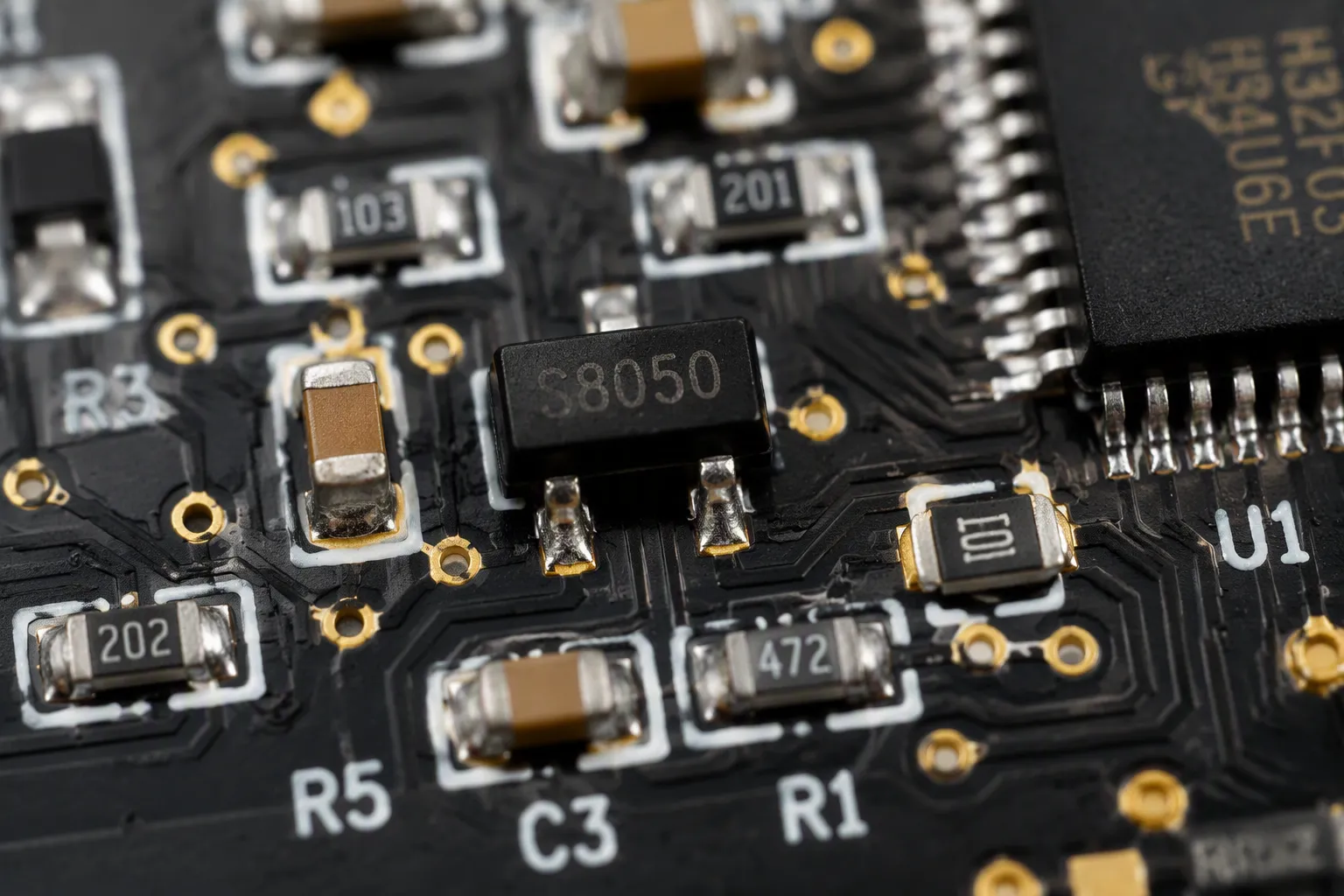
The general-purpose transistors you just reviewed handle everyday tasks with ease. However, some projects demand more specialized components. You might need a surface-mount device for a compact PCB. Perhaps your audio amplifier requires medium power handling. Or maybe you must switch high currents for a motor driver. These three npn transistors fill those specific roles. Each one excels in its niche while maintaining the reliability you expect from quality semiconductor components.
Surface-mount technology dominates modern electronics manufacturing. The SMD transistor market reflects this trend, with projections showing a compound annual growth rate of 6–8% from 2023 to 2028. This growth stems from the demand for smaller, more efficient devices. The S8050 answers that demand with impressive specifications packed into a tiny SOT-23 package.
This npn transistor handles a collector-emitter voltage of 25V. The maximum collector current reaches 700mA, which proves substantial for such a small package. The SOT-23 form factor measures just a few millimeters across. You can place hundreds of these components on a single board without consuming valuable space. The small size reduces parasitic inductance and capacitance, improving high-frequency performance. This npn transistor suits designs where board real estate comes at a premium.
Portable electronics rely heavily on the S8050 for low-power switching duties. You will find this component inside mobile POS machines, where it manages small signal switching tasks reliably. The device category for such portable equipment includes smartphones, wearables, and handheld payment terminals. These applications demand components that perform consistently while occupying minimal space. The S8050 delivers on both counts. You can use it to drive indicator LEDs, interface with sensors, or switch small loads directly from a microcontroller output. Its compact footprint allows dense circuit layouts, which proves essential for modern product design. When you need to shrink your PCB without sacrificing performance, this npn transistor becomes your go-to choice.
Through-hole components still hold significant value in many applications. The BD139 represents a bridge between small-signal transistors and high-power devices. This npn transistor handles medium current levels while offering excellent thermal stability. Audio enthusiasts and professional designers alike appreciate its consistent performance.
The BD139 supports a collector-emitter voltage of 80V. Its maximum collector current reaches 1.5A, which suits medium-power circuits perfectly. The TO-126 package provides a metal tab for heat sinking. You can mount this package to a heatsink when your application dissipates significant power. The robust construction ensures reliable operation across a wide temperature range. This bipolar junction transistor delivers predictable gain characteristics that simplify circuit design.
Audio amplification represents the BD139's primary calling. You will find this npn transistor in the driver stages of many audio amplifiers. It boosts the signal from preamplifier circuits before the final power stage takes over. The linear gain characteristics preserve audio fidelity, ensuring clean sound reproduction. You can also employ the BD139 in active speaker crossover networks. These circuits split audio frequencies between tweeters and woofers. The transistor's medium power handling allows it to drive the crossover components effectively. For your DIY audio projects, this npn transistor offers the perfect balance between small-signal transistors and bulky power devices.
Some applications require substantial current handling capability. The TIP31C steps up to meet those demands. This npn transistor belongs to the TIP31 family, known for rugged construction and high reliability. When you need to control motors, power supplies, or other high-current loads, this component delivers the performance you require.
The TIP31C handles a collector-emitter voltage of 100V. Its maximum collector current reaches 3A, making it suitable for demanding power control tasks. The TO-220 package includes a large metal tab designed for heatsink mounting. You can dissipate significant power with proper thermal management. This npn transistor operates reliably in high-temperature environments when you provide adequate cooling. The robust internal construction withstands the stress of repeated switching cycles.
Power supply circuits benefit greatly from the TIP31C's capabilities. You can use this npn transistor as a pass element in linear voltage regulators. It handles the current flow between the unregulated input and the regulated output. The transistor operates in its linear region, dissipating excess voltage as heat. For motor driver applications, the TIP31C excels as a low-side switch. You can control DC motors by driving the base with a suitable current source. When the transistor enters saturation, the collector-emitter voltage drops to a minimal value. This saturation state minimizes power loss across the component. You can also use the TIP31C in relay driver circuits, solenoid controllers, and battery charging systems. Its high current rating makes it versatile for many power control applications.
These three specialized npn transistors expand your design possibilities. The S8050 enables compact SMD layouts for portable devices. The BD139 provides medium-power amplification for audio circuits. The TIP31C handles high-current switching for power applications. Each component serves a distinct purpose, allowing you to select the right tool for your specific project requirements.
You have looked at the best npn transistor choices for your projects. Now you must decide where to buy them. The source of your parts matters just as much as the part number you pick. A dependable supply chain keeps your design safe from hidden flaws and unexpected behavior. This section explains why buying quality parts matters and introduces a manufacturer you can rely on.
Your circuit design expects the transistor to act exactly as its datasheet says. Fake parts break that expectation. These counterfeit components enter the electronics market through unofficial channels. They often show genuine-looking labels but contain poor-quality silicon inside. The results for your project can range from small performance problems to total system failure.
Fake npn transistors fail in expected yet dangerous ways. The worldwide trade in counterfeit goods reaches up to $1 trillion each year, with electronics making up a large portion. Think about what happens inside a fake bipolar junction transistor during use:
Smaller silicon die cannot release heat well, causing overheating and later failure.
Poor construction and materials push the device beyond safe limits, causing sudden breakdown during regular use.
Power dissipation creates a loop of rising current and junction temperature, ending in thermal breakdown.
Uneven current flow from material flaws creates hot spots, speeding up damage.
These failure modes appear without warning. A counterfeit transistor might work fine during first tests, then fail hours later under heat stress. The 2016 recall of a major smartphone line because of fake battery cells shows the risk. That recall cost around $5 billion. Your project may not be that large, but the reliability impact stays the same.
The Semiconductor Industry Association (SIA) says that counterfeit parts cost manufacturers over $7.5 billion each year.
Compliance rules protect both your project and the environment. RoHS limits dangerous substances like lead and mercury in electronic parts. REACH controls the safe use of chemicals across the supply chain. Real manufacturers certify their products against these rules. Counterfeiters ignore them completely. When you buy compliant parts, you make sure your product meets legal requirements for sale in world markets. You also avoid the danger of toxic materials contaminating your production process.
Dongguan Merry Electronic Co., Ltd, known as MeiZhao Electronic, has earned its reputation for quality since 2013. The company designs, develops, and sells semiconductors from its location in Dongguan City, China. Its product range includes transistors, diodes, Schottky diodes, bridge rectifiers, silicon carbide diodes, and power ICs. This variety means you can get multiple parts from one reliable partner.
MeiZhao Electronic holds ISO9001, ISO14001, and IATF16949 certifications. These credentials show strong quality management, environmental care, and automotive-grade standards. The company uses automated production lines and strict quality checks at every step. Its field application engineer team offers technical help for industry-specific problems. This dedication ensures every npn transistor you receive meets its stated specs for voltage, current, and gain.
The company serves network communication, automotive, consumer electronics, industrial control, and energy sectors. Each industry needs different performance features from its switching parts. MeiZhao Electronic adjusts its products to meet those varied needs. Whether you need a small-signal transistor for sensing or a power device for motor control, the portfolio covers your needs. All products follow RoHS and REACH standards, ensuring environmental safety and market approval.
When you pick MeiZhao Electronic as your supplier, you guard your project against counterfeit risks. You gain a partner dedicated to quality, compliance, and innovation. Your designs deserve parts that perform exactly as specified, every time.
You have six strong NPN transistor options for your work. Each one has a different job. The best choice depends on your project's voltage, current, speed, and package needs. This guide helps you pick the right part for your task.
Understanding the main specs helps you choose faster. The table below shows the important details for each NPN transistor we talked about.
Transistor | Package | Max Voltage | Max Current | Best Use Case |
|---|---|---|---|---|
BC547 | TO-92 | 45V | 100mA | Signal amplification |
2N2222 | TO-18/TO-92 | 40V | 800mA | General switching |
2N3904 | TO-92 | 40V | 200mA | High-speed logic |
S8050 | SOT-23 | 25V | 700mA | Compact SMD designs |
BD139 | TO-126 | 80V | 1.5A | Audio drivers |
TIP31C | TO-220 | 100V | 3A | High-current loads |
The voltage and current limits define what each transistor can do. The BC547 only handles 100mA, which is perfect for small sensor circuits. The 2N2222 goes up to 800mA, so you can drive relays and small motors. The TIP31C leads with a 3A rating, making it good for powerful jobs.
Gain values also differ between these parts. The BC547 has high stability and low noise for tiny signal boosting. The 2N2222 gives a DC current gain around 75 at 10mA, which works for medium-power tasks. When you need to switch a 2A motor, the TIP31C gives a gain of about 60 at that current. That gain is enough for reliable switching without needing too much base current.
Package choice matters for your board layout and heat control. The S8050 comes in a SOT-23 surface-mount package, great for small designs. The BD139 uses a TO-126 through-hole package with a metal tab for heat sinking. The TIP31C uses a TO-220 package, which fits larger heatsinks for continuous high-current work.
Transition frequency numbers differ across these parts. The 2N2222 handles frequencies up to 250MHz, making it good for RF uses. The 2N3904 also works well at high speeds for fast digital circuits. For the S8050, BD139, and TIP31C, the source documents do not list transition frequencies. You should check each manufacturer's datasheet when your project needs exact high-frequency performance.
Your project needs decide which NPN transistor works best. Think about the load current, switching speed, and board space before you choose.
Pick the BC547 when you boost weak signals from sensors or audio sources. Its high gain and low noise keep the signal clean. The 100mA limit works fine for preamplifier stages and temperature sensing. You can drive this transistor directly from many microcontroller outputs without extra parts.
The 2N2222 handles many different switching jobs. Its 800mA current capacity drives LEDs, relays, and small DC motors. The higher power dissipation of 1.8W allows it to run continuously under moderate loads. This NPN transistor is your go‑to for general‑purpose switching in through‑hole designs.
Choose the 2N3904 when your circuit needs fast changes. Its low noise and fast switching support PWM control and digital logic. The 200mA rating works perfectly for logic‑level connections. You can use it to shift between different voltage levels or drive optocouplers.
The S8050 fits modern compact PCB layouts. Its SOT-23 package takes up very little board space but still delivers 700mA. Portable devices benefit from this small size. You can place this NPN transistor directly on your board without worrying about through‑hole routing.
Audio amplifier projects gain from the BD139’s linear behavior. The 80V rating and 1.5A current capacity handle driver stage needs well. The TO-126 package lets you attach a small heatsink when needed. This bipolar transistor keeps audio clear through its steady gain profile.
The TIP31C is great for controlling big loads. Its 3A rating goes beyond the 2A needed for typical DC motor control, giving a safety margin. The low saturation voltage of 1.2V at 3A cuts power loss during use. The TO-220 package supports good heat sinking, which is critical for running at 2A continuously. Proper NPN switch operation needs enough base current to drive the transistor fully into saturation. You can get that with a suitable driver circuit connected to your microcontroller output.
Remember that saturation lowers the voltage drop across the transistor, reducing heat. Always check that your base drive circuit can supply enough current for the collector load you plan to switch.
Your project requirements determine the best npn transistor choice. No single device works for every design. Focus on voltage and current needs, switching speed, package type, and power dissipation. These factors guide your selection. Start with the BC547 or 2N2222 transistor for low-power experiments. These npn transistors suit many small tasks. You can use them for sensing, amplification, or light switching. Move to the BD139 or TIP31C for power circuits. These npn devices handle higher current levels. They operate reliably in demanding applications like motor drivers or audio amplifiers. Choose the transistor that matches your load specifications. Share your favorite picks or project experiences in the comments. Your insights help other builders choose the right part for their current needs.
NPN parts take positive voltage at the collector. PNP types use negative voltage instead. NPN switches faster in most circuits. Pick based on your circuit polarity needs.
Check your load voltage and current first. Match these numbers to the transistor ratings. Think about through-hole or SMD packages. Start with the BC547 or 2N2222 for general tasks.
Yes, for many circuits. The 2N2222 handles higher current. Check the pinout matches your board. The 2N2222 works for general switching and driving tasks.
The part may not fully turn on. Too much load current causes heat. Make sure base drive pushes the npn into full saturation. Add a heatsink if needed.
Audio amplifier driver stages use this npn part. It works in active speaker crossovers and medium-power circuits.
Yes. The transistor works the same inside. SMD packages handle less power dissipation. Choose SMD for compact boards. Use through-hole for high-power designs or easy prototyping.
It shows the gain value. A higher hFE means a small base signal controls a larger collector signal. Use this number to calculate your base resistor.


